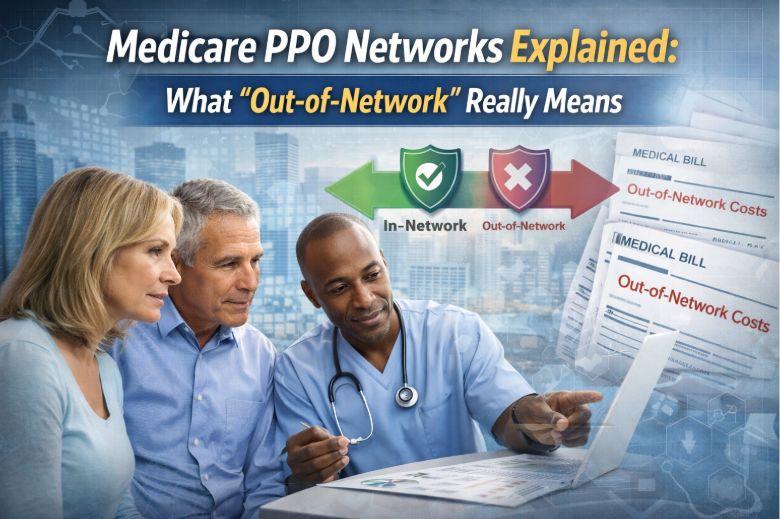
Medicare PPO Networks Explained: What Out of Network Really Means
When choosing a Medicare plan, many people opt for Medicare PPO (Preferred Provider Organization) plans because they offer flexibility and freedom to see doctors and specialists. However, there’s one important thing that can be confusing: out of network coverage. What does it mean when a provider is out-of-network, and how does it affect your costs? In this article, we’ll explain how Medicare PPO networks work, the differences between PPO and HMO plans, and the realities of out-of-network coverage.
What is a Medicare PPO Plan?
A Medicare PPO plan is the type of Medicare Advantage plan. Medicare Advantage plans are provided by other private insurance companies and they are designed to provide the same coverage as Original Medicare (Part A & Part B), along with extra benefits like prescription drug coverage. What sets Medicare PPO apart from other plans, like Medicare HMO (Health Maintenance Organization) plans, is that it allows more flexibility when it comes to choosing healthcare providers.
Key Features of Medicare PPO Plans
- Flexibility to See Out of Network Providers: Unlike HMO plans, which only cover in-network doctors and hospitals, PPO plans give you the option to see doctors and specialists outside of the network. However, you will pay more for out of network care, and you may need prior authorization for certain treatments.
- No Primary Care Doctor Required: Medicare PPO plans donot require you to select a primary care doctor (PCP). This is one of the key differences between PPO and HMO plans, as HMOs typically require you to choose a PCP who will over see your care and refer you to specialists when needed.
- No Referral for Specialists: With a PPO plan, you can visit an expert without needing a referral from a PCP. This gives you more control over your healthcare and allows you to see specialists directly.
What Does Out of Network Mean in Medicare PPO?
In the context of Medicare PPO plans, out of network refers to healthcare providers, including doctors and hospitals, that do not participate in your plan’s network. PPO plans allow you to visit out of network providers, but you should be aware that doing so can lead to higher out-of-pocket costs.
Provider Agreement
When you visit an out of network doctor or hospital, the provider must agree to treat you. While PPO plans allow you to seek care outside of the network, not all providers will accept PPO coverage. If a doctor or hospital does not accept PPO insurance, you may have to pay the full cost of your care, or you may not be able to see that provider at all.
Provider Willingness to Bill PPO
Even if an out-of-network provider agrees to treat you, they must also agree to bill your PPO plan. If they are unwilling to do this, you will be responsible for providing out of pocket. Additionally, the provider must agree to the PPO plan’s payment terms and reimbursement rates.
Prior Authorization
For many services, your PPO plan may require prior authorization before covering out-of-network care. This means you need to get approval from your insurance company before receiving treatment. If you do not get prior authorization, your plan may refuse to cover the service, leaving you to pay the full cost.
Key Points For Medicare PPO Out of Network Coverage
Medicare PPO plans offer more flexibility when it comes to choosing providers, but it’s important to understand that out-of-network coverage comes with certain conditions.
Higher Costs for Out of Network Care
When you visit out of network providers, you usually have to pay more than when you stay in your network. For out of network care, your PPO plan may only cover a part of the costs, and you may have to pay the rest. When you get care through your insurance plan, you usually pay less for copayments or coinsurance.
Out of network providers may sometimes make you pay for services up front. After that, you can file a claim with your PPO insurance company to get your money back, but you might still have to pay more out of pocket.
No Guarantee of Coverage
Just because you have a PPO plan does not guarantee that you will be covered when you go out of network. For coverage to apply, the provider must agree to see you, agree to bill your PPO plan, and agree to the PPO plan’s terms. Even then, you may still need to get prior authorization for special services, which can delay your treatment.
Check Before You Go
It’s important to always check with both your provider and your PPO insurance company before seeking out-of-network care. Some doctors or hospitals may refuse to treat you if they do not accept your PPO plan. In addition, some PPO plans may have limitations on the services they will cover when you go out of network.
What’s the Difference Between Medicare HMO vs PPO
When considering Medicare Advantage plans, many people wonder about the difference between HMO & PPO plans. Both types of plans are introduced by private insurance companies and provide Medicare benefits, but they have different rules regarding out-of-network care.
HMO Plans
- Network Restrictions: HMO plans generally require you to stay within the network for all of your care. You cannot go out of network unless it’s an emergency.
- Primary Care Doctor: HMO plans require you to choose the primary care doctor (PCP) who will oversee your care & provide referrals to specialists.
- No Out-of-Network Coverage: HMO plans typically do not offer out-of-network coverage except for emergency services.
PPO Plans
- Network Flexibility: PPO plans give you to see out-of-network providers, but you will pay more for out-of-network care.
- No Primary Care Doctor Required: Unlike HMO plans, PPO plans do not ask you to have a primary care doctor. This gives you more control over your healthcare.
- Direct Access to Specialists: With a PPO plan, you do not need a referral to see a specialist. This can make it easier to get the care you need without delays.
What is Changing Medicare Advantage PPO Plans in 2026
Medicare PPO plans will still let you go to a doctor outside of your network in 2026, but the rules and costs may change. Insurance companies are growing their networks to make it easier for PPO users to get care. Out of network care will still cost more, though, and you may need to get permission for some services ahead of time.
If you are considering a Medicare PPO plan in 2026, it’s important to review the plan’s network and out-of-network coverage options. Some PPO plans may have expanded networks of providers, making it easier to access care both in-network and out of network.
The Importance of Understanding Out of Network Coverage
It is very important to understand how out of network coverage works before choosing a Medicare plan. Even though PPO plans give you options, the higher costs of care that is not covered by the plan can add up quickly. You can avoid surprising costs and make sure you get the care you need without going broke by carefully studying your PPO plan and network providers.
If you have a PPO plan or are thinking about getting one, you need to make sure that your preferred healthcare providers are in-network. This can help you escape having to pay more and make sure that your PPO plan covers your services.
LMS Insurance Group is Your Partner in Medicare Coverage
At LMS Insurance Group, we help seniors figure out Medicare, which can be hard to understand. You can choose from a Medicare PPO, an HMO, or another type of Medicare Advantage plan. We can help you understand your choices and pick the plan that meets your needs.
It can be hard to choose the right Medicare plan, but if you get the right information, you can make a choice that gives you the benefits you require at a price you can afford. At LMS Insurance Group, our goal is to help you find the best plan for your health care needs.Get in touch with LMS Insurance Group if you need help understanding Medicare PPO out of network coverage or want to learn more about your Medicare choices. When you need help, our skilled agents are here for you all the way through. Let us help you pick the best plan for your needs and make sure you get the care you require.